
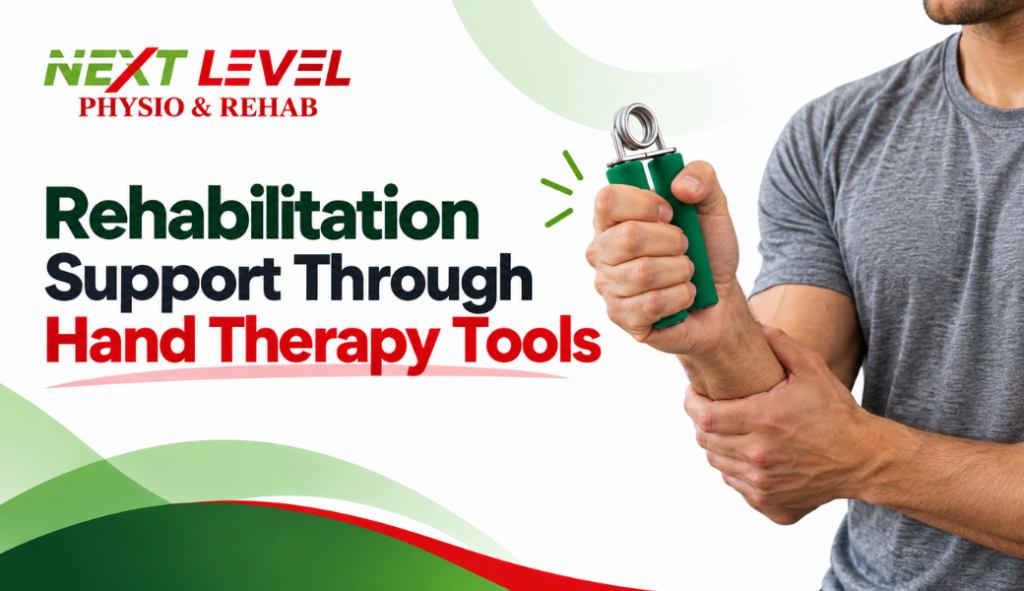
Our hands play an essential role in almost everything we do, from writing and typing to cooking, driving, exercising, and performing everyday household tasks. When an injury, pain, stiffness, or weakness affects the hand or wrist, even simple activities can become challenging.
Hand therapy tools can be an important part of rehabilitation, helping patients gradually restore strength, flexibility, coordination, and functional movement. When used under professional guidance, these tools can complement exercises and other physiotherapy techniques to support a safe and effective recovery.
If you are looking for Physiotherapy in Bhayandar, understanding how hand therapy tools are used during rehabilitation can help you make informed decisions about your recovery.
Why Hands Need a Different Approach
The hand is a small but incredibly complex structure — 27 bones, dozens of muscles, tendons, and ligaments, all packed into a space smaller than most people’s phones. A single injury (say, a fractured wrist or a tendon repair) can affect grip strength, fine motor control, and sensation all at once. This complexity is exactly why generic exercises alone rarely cut it — hand rehab relies heavily on purpose-built tools to target very specific deficits.
The Core Tools Used in Hand Therapy
1. Grip Strengtheners & Hand Exercisers
Spring-loaded grippers and resistance putty are used to rebuild grip strength progressively — starting light and increasing resistance as the hand recovers. This is especially important after fractures, tendon repairs, or prolonged immobilization in a cast.
2. Finger Ladders & Range-of-Motion Devices
These simple wall-mounted or handheld devices track and guide finger and wrist movement through a controlled range, helping restore flexibility after stiffness from surgery, arthritis, or injury — while also giving patients a visual way to track their own progress.
3. Therapy Putty (Graded Resistance)
Color-coded putty of varying resistance levels lets a physiotherapist precisely control how much load a healing hand is exposed to, week by week. It’s low-tech, but remarkably effective for rebuilding both strength and fine motor coordination simultaneously.
4. Splints & Orthotic Devices
Custom or semi-custom splints protect a healing structure while still allowing controlled movement — striking a careful balance between rest and mobility. Static splints immobilize completely, while dynamic splints gently assist movement, depending on what the injury needs at each stage.
5. Sensory Re-education Tools
After nerve injuries, hands often lose fine sensation — the ability to distinguish textures, temperatures, or even recognize objects by touch alone. Tools like textured objects, temperature discs, and two-point discrimination tests are used to systematically retrain the brain’s connection to the hand.
6. Fine Motor Task Boards
Pegboards, buttoning boards, and coin-sorting exercises might look simple, but they’re specifically designed to rebuild the coordination needed for everyday tasks — the kind of practical function that matters far more than raw strength alone.
What a Typical Recovery Timeline Looks Like
Hand rehabilitation generally follows a staged approach:
- Protection phase — managing swelling, pain, and protecting healing tissue (often involving splinting)
- Early mobility phase — gentle, controlled range-of-motion work to prevent stiffness from setting in
- Strengthening phase — progressive resistance work using grippers, putty, and graded exercises
- Functional phase — task-specific training so patients can return to real-world activities like writing, cooking, or working confidently
Skipping stages — especially rushing into strengthening before mobility is restored — is one of the most common reasons hand injuries take longer to heal than expected. This is exactly why structured post surgery physiotherapy in Mira Road matters after any hand surgery: the sequence, not just the exercises, determines the outcome.
Why Personalized Guidance Matters More Than the Tools Themselves
It’s tempting to think you can just buy a hand gripper online and DIY your own recovery. But without proper assessment, using the wrong tool at the wrong stage can actually delay healing or reinforce compensatory movement patterns that cause problems later. A physiotherapist doesn’t just hand you a tool — they decide which tool, how much resistance, and when to progress, based on how your specific tissue is healing.
This precision is what patients get through the best physiotherapist in Mira Bhayandar — a tailored combination of tools and technique, not a generic exercise sheet.
Don’t Underestimate Hand Rehab
Because hands are involved in nearly every daily task, even a partial recovery can feel like a major limitation. Whether it’s after a fracture, surgery, or a repetitive strain injury, proper hand therapy with the right tools can be the difference between “functional again in weeks” and “still struggling months later.”
At Next Level Physio & Rehab, we combine hands-on technique with the right therapeutic tools to make sure your recovery isn’t just about healing — it’s about getting your hands fully back to doing what they do best.
